Embrace Mobile Mental Health Clinic
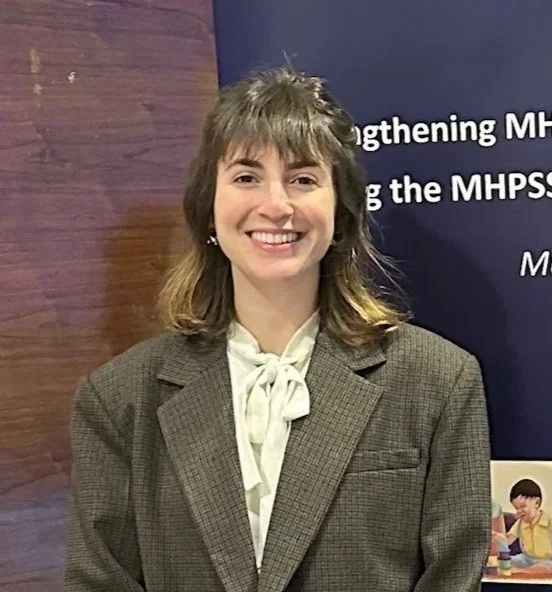
Marie-Lynn Boursali
During my experience with the Bridges to New Horizons program, I was serving as Project Coordinator for Embrace and its Mobile Mental Health Clinic (MMHC), an initiative aligned with Lebanon's National Mental Health Programme. MMHC operates under the umbrella of Lebanon’s Ministry of Public Health, sustained through donor support including The Netherlands Refugee Foundation - Stichting Vluchteling (SV) and the European Union (EU) implemented by the International Organization for Migration (IOM). The MMHC has a dedicated team that also includes medical staff, a Field and Care Officer, MEAL and Research Officer, driver, and a growing pool of volunteer therapists-in-training.
Lebanon's conflict-affected and underserved communities – from Akkar to Tripoli to the Beqaa and the South – carry mental health needs deepened by instability and displacement, with little physical or financial access to care. The Mobile Mental Health Clinic (MMHC) is Embrace's answer: a bus bringing free, confidential mental health consultations and psychosocial support directly into these communities, then referring beneficiaries onward to Primary Health Care Centers (PHCCs) for continuity of care.
A new insight from the Bridges to New Horizons program is that leadership isn't a fixed identity; it’s also a set of tools. For instance, use of the Spiral Dynamics framework showed me the different value systems that shape how people lead. Some are driven by order, others by achievement, consensus, or belonging. None are “wrong.” Each approach meets a need. Through the individual leadership assessment we completed, I identified my natural leadership style, as well as a deeper lesson about how a good leader moves between styles (what Spiral Dynamics identifies as “colors”).
The emphasis on project management tools reinforced that there are steps to move strategically from a felt problem to a structured, measurable plan. But the integration of trauma healing reinforced the most human lesson of project development and management. It’s the principle that all people are wounded in some way. A leader who sees both a team's strengths and wounds leads with more compassion and builds a team that works together more honestly.
In the program, overall, we distinguished between “negative peace” (the mere absence of conflict) and “positive peace” (the presence of justice, trust, and functioning systems). Positive peace isn't abstract or far away. Every session we run, every beneficiary we reach, every referral we follow up on moves us closer to it. And positive peace is built project by project.
We began by mapping our Conflict Tree (the root causes and effects of the problem). That analysis became our Theory of Change: awareness and access to mental health care lead to improved wellbeing, which reduces tension, which strengthens social cohesion.
That Theory of Change became a logframe and Work Breakdown Structure with three outputs (awareness, service delivery: mental health consultations and support, and PHCC referral pathways), each with its own indicators, from mental health survey score improvements to referral follow-up rates.
Beyond our donors, MMHC partners with organizations across multiple regions of Lebanon, who host our monthly visits and connect us to the communities who need us most.
We share this work through awareness sessions run inside the communities themselves, through partner organizations who spread word of our visits, and through the reporting that keeps our story visible to those who support it.
We measure success through validated pre/post mental health scores, the number of beneficiaries reached and referred, and how many actually access care afterward, because success isn't just showing up, it's what changes because we did.