STEAM for Peace
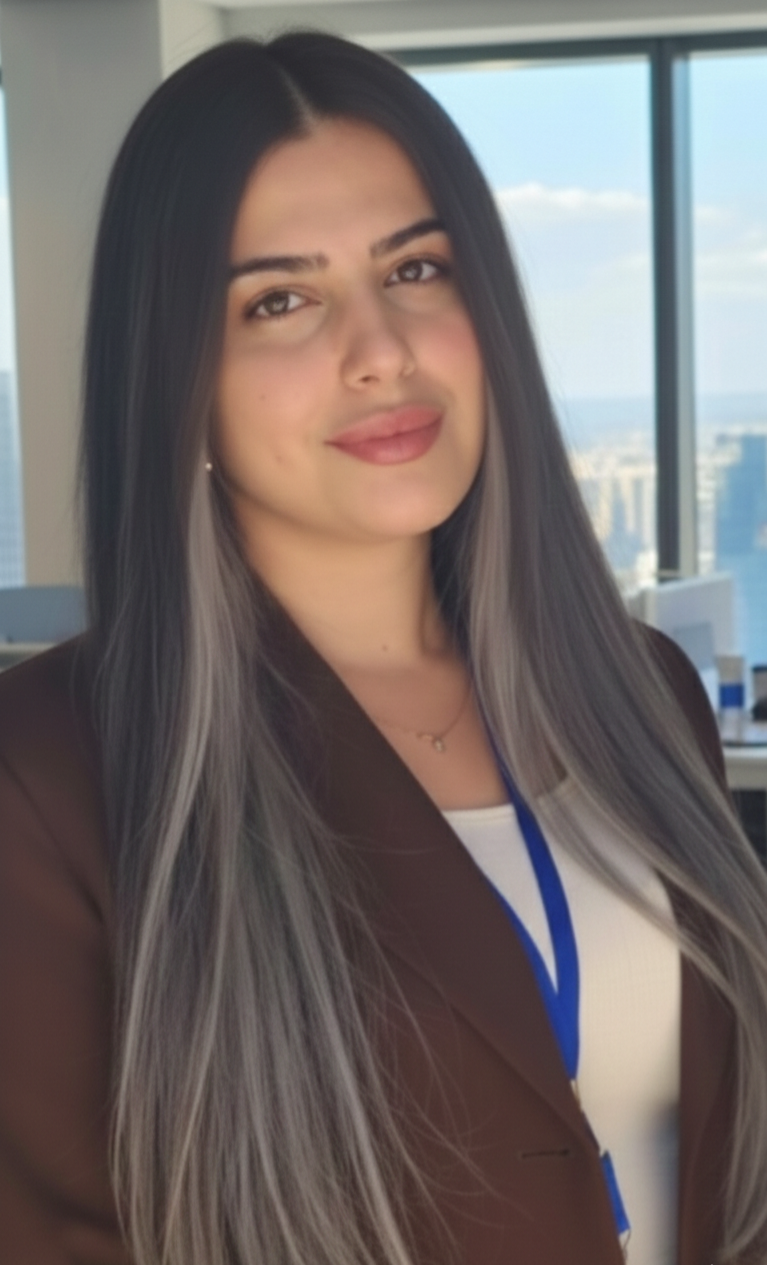
Rasha Hlayhel
I am an experienced K-12 educator dedicated to listening to students and helping them shape positive life paths. The challenge is greatest in times of war and crisis when Lebanese students lose hope as they face displacement, disconnection from school, and risk of recruitment into violent activities. I am passionate about putting my experience and skills to work for peace as a STEAM Instructor, Life Coach, Trainer of Trainers (ToT), Generative AI & Microsoft Certified Educator.
So, as one educational antidote to the effects of violence on children, I created “STEAM for Peace” while participating in the Bridges to New Horizons program. My intention was for it to align with and be part of the broader Peactil initiative to build a peace education pipeline across school levels. Given that STEAM is an acronym for Science, Technology, Engineering, Arts, and Math, my STEAM for Peace curriculum and activities use Minecraft Education and AI to bring to life the globally recognized Eight Pillars of Peace framework from the Institute for Economics & Peace (IEP) and provide engaging activities such as the building of peace gardens that teach about the Eight Pillars.
My vision of STEAM for Peace is to use it to build critical thinking skills but also our youth’s sense of identity and leadership. This is achievable when we create safe spaces where students learn through play, design peace gardens, and practice five core skills: knowing, doing, being, living together, and becoming. This can simultaneously build both digital and on-the-ground citizenship.
Initially, I led most of the development of STEAM for Peace with a small core team. During my participation in Bridges to New Horizons, we partnered with a tech company to expand our impact, providing Minecraft accounts and tech instruction to reach students aged 10 to 16 most affected by conflict. The teacher and student experience includes:
Introduction of peace through dialogue and reflection on the Eight Pillars of Peace framework.
Through gamification, experiential learning, and design thinking, the youth are encouraged to see themselves as empowered Peace Ambassadors using Minecraft Education to build and architect "Newtopia," a digital peace city where they practice digital citizenship and facilitate peer coaching sessions.
The bridge from the digital to the real world is built when students then organize seed papers and plantable pencils to grow their peace wishes in the shape of a peace symbol and use micro:bit sensors to design automatic irrigation systems. A transformation occurs in the creation of a "Smart Peace Garden" through which students experience real-time collaboration and problem-solving before showcasing the result to parents and the community at a STEAM Fair.
We’re moving at a fast pace. We have piloted STEAM for Peace at El Bireh School in Al-Dahie where we trained five teachers and 30 Peace Ambassadors, reaching 150 students and community members. We are expanding to Rosary Sisters School in Jbeil, with 38 Grade 6 students and 34 Grade 7 students. The school is one of 150 official "Schools of Citizenship" launched by Lebanon’s First Lady Nehmat Aoun. We have a vision of expansion across the Schools of Citizenship network and other public and private schools looking to integrate peace education. Such a breadth of application will facilitate our ability to measure impact on five core skills that we have identified, as well as knowledge acquisition about peace and social cohesion.